

The retail industry is at a crossroads. As digital commerce continues to dominate headlines and quarterly reports, physical stores face an existential question: what unique value can brick-and-mortar provide that can’t be replicated online? To explore this challenge and the emerging solutions, we sat down with David Polinchock, Co-Founder and President of the Unified Brand Experience Lab and a RETHINK Retail Top Expert, whose unique journey from Disney performer to retail technology pioneer offers compelling insights into the future of experiential retail.
From Magic Kingdom to Brand Innovation
Polinchock’s retail philosophy wasn’t born in a boardroom or business school—it was forged on the stages and behind the scenes of Walt Disney World in 1981. As both a merchandise cast member and performer in the Tencennial Parade, he witnessed firsthand the power of intentional experience design during an era when only the Magic Kingdom existed.
“Under Walt’s rules, no maintenance work was done during the day when the park was open,” Polinchock recalls. “They were paying double and triple overtime to union employees to make sure that when the gates opened in the morning, it looked like it was the first time the park had ever opened.”
This commitment to experience over short-term cost savings made a lasting impression. The result? “Invariably, the first thing people say about Disney is, ‘Wow, it’s so clean.’ It’s expensive to be clean on a balance sheet, but it’s equally expensive on a customer sheet to not do that.”
The Disney foundation also taught Polinchock about the power of employee investment. “Our holiday party was two Saturdays in December where they closed the park at six o’clock for guests and reopened it for the employee holiday party. I got a ticket for me and three other people. Could you imagine Disney doing that today?” This level of investment in cast members created the passionate workforce that made the magic possible.
The Evolution of Retail: From Passion to Pylons
Today’s retail landscape bears little resemblance to the passionate, community-driven stores that once defined commerce. Polinchock and his colleague Dustin Fuhs have coined a term for the problem: “pylons”—individuals fulfilling roles that, with or without them, offer no clear path forward.
“The people who started these stores didn’t get together and go, ‘You know what I want? I want a store that’s kind of dull and boring and doesn’t really stand for anything,'” Polinchock explains. “They were passionate about what they were doing. Today, you just don’t have passionate people running the businesses for the most part.”
This shift has created what amounts to a leadership crisis. When C-suite executives visit stores, they’re often shown a carefully orchestrated performance with extra labor hours and perfect conditions—a “show” that bears no resemblance to the everyday customer experience. “We know the difference between good show and bad show,” Polinchock notes, drawing on his Disney background. “A good show is whether it’s the CEO of a company or a high school kid—they should be getting the same experience, but they’re not.”
The Cautionary Tale of Retail Giants
The conversation turns to retail’s most sobering lessons, starting with Sears. “You look at Sears, which basically created e-commerce,” Polinchock observes. “You got a catalog, you looked at things, you called a number, they delivered it—they even drop-shipped it to the store closest to you. To watch a brand like that just fade away because they couldn’t get out of their own way is really sad.”
Conversely, he points to success stories like Abercrombie, which has continuously reinvented itself from supplying adventure clothing to Teddy Roosevelt to becoming a modern retail destination. “They’ve been able to constantly reinvent themselves… from a store that was so dark you couldn’t see anything with overwhelming perfume smells to this brightly lit store with wide aisles.”
The difference? Some brands understand they must evolve, while others remain trapped by their own legacy thinking.
The Third Place Revolution: Filling the Community Gap
The COVID-19 pandemic accelerated existing trends around work, community, and social connection, creating both challenges and unprecedented opportunities for physical retail. Polinchock’s concept of “New Third Places” addresses a fundamental shift in how people work and socialize.
“We went from everything being separate—my dad’s work day, you occasionally had dinner with the boss but you didn’t really want to—to a time when work and the third place were the same place,” he explains. “Then COVID hits, we can’t go to work at all anymore.”
The result? Young professionals in studio apartments discovered that “making friends and meeting people is really hard. Even if you didn’t like everyone you worked with, there were people you did like. So you had a network that you could kind of hang with.”
Meanwhile, retailers found themselves with a different challenge: “We don’t need inventory in our stores anymore to the level that we used to have,” Polinchock notes, referencing a fashion company that once proudly stocked 5,000 pairs of jeans in their SoHo location. “Today, you’d be fired in an instant because you were so stupid for having that much inventory in a store.”
This convergence of excess retail space and hungry-for-community consumers creates what Polinchock sees as retail’s greatest opportunity: “You have this emotional human need for contact and to be with other people, and you have all these stores with a lot of space that they’re not using well.”
The Apple Store Revelation: Community as Soundtrack
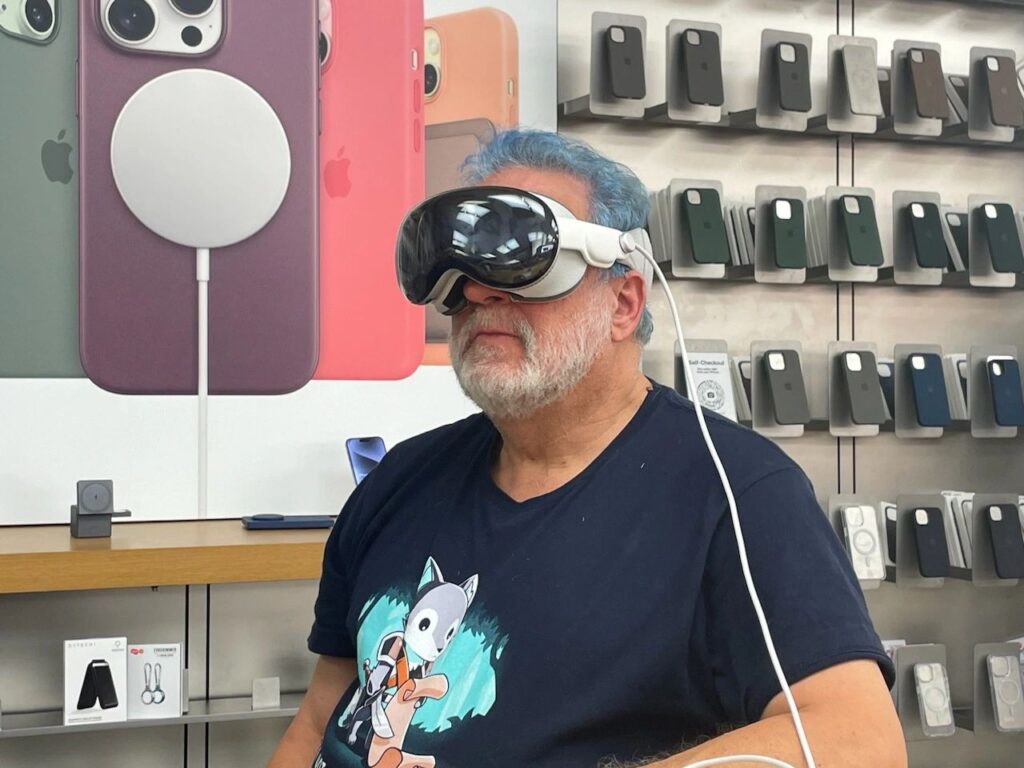
One of Polinchock’s most intriguing insights comes from his observations of Apple Stores. “In a lot of Apple stores, there’s no music playing,” he notes. “It’s because it’s the people in an Apple store talking to each other that is the soundtrack of an Apple store.”
This approach represents a fundamental shift in retail thinking—from manufactured ambiance to organic community building. When customers with shared interests naturally engage with each other, the store becomes more than a point of purchase; it becomes a gathering place for a community united by common passions.
The Institutional Knowledge Crisis
The conversation reveals a deeper problem plaguing modern retail: the loss of institutional knowledge. Drawing parallels to government, Polinchock explains: “In government, you would continuously have the non-political appointees because they were the ones that knew how to turn things on, turn things off.”
Retail has lost this continuity. “Being a retail store clerk level used to be a career,” Polinchock reflects. “People did that their whole life.” He shares the example of Dustin’s father, who worked at Walmart for 40 years, rising to assistant manager—a position that “provided for his family, bought him houses, allowed him to be satisfied.”
Today’s retail environment offers no such stability or career progression, creating a vicious cycle where inexperienced staff provide poor service, leading to reduced customer satisfaction and further justification for labor cost-cutting.
The TGI Fridays Model: When Employees Were Ambassadors
Polinchock shares a compelling example of how retail once valued its employees. Working as a waiter at TGI Fridays, he witnessed their passport program firsthand. To earn a passport, employees needed at least six months of tenure and three consecutive months of peer recognition as the best in their category.
“The passport allowed you to walk into any TGI Fridays in the world and pick up a shift,” he explains. This created a global community of brand ambassadors who would take summer vacations, working at different locations as they traveled. “Invariably somebody in the store would say, ‘Hey, do you need a place to crash?’ Because if you’re a passport holder at Fridays, that assumes certain things about you as a human being.”
Contrast this with today’s approach: “You talk to so many retail brands and they will say, ‘We don’t let our employees be part of our perk program because they’ll abuse it.’ The first thing you’re saying is we think all our employees are shit, and then you’re not giving them the encouragement to live and love your brand.”
Technology’s True Role: Enabler, Not Replacement
Despite his extensive background in emerging technologies—from pioneering VR marketing in 1991 to current work with AI, computer vision, and augmented reality—Polinchock maintains a refreshingly grounded perspective on retail technology’s role.
“A lot of our shopping has no basis on logical progression,” he explains, sharing a personal anecdote about buying a Buffalo t-shirt despite owning thousands of shirts. “My wife is gonna say, ‘Why did you buy a t-shirt? You have 4,000 t-shirts.’ And I’m gonna say, ‘But I was in Buffalo, how could I not get a t-shirt?’ AI is very good at synthesizing data, but none of our shopping has that logical basis.”
This insight cuts to the heart of retail’s challenge: while technology can optimize logistics and operations, it struggles to replicate the emotional and social drivers that motivate human behavior.
The Power of Experience Artifacts
Drawing from his theater background and extensive entertainment industry experience, Polinchock emphasizes the critical role of merchandise as “artifacts of experience.” These items serve as conversation starters and memory triggers that extend experiences far beyond the initial visit.
He cites recent visits to Broadway shows and the Grand Ole Opry as masterclasses in this approach: “Every time they do a show at the Opry, they print a poster just for that show using their signature Hatch Show Print style. It was 20 bucks. There was no way I was not gonna buy the poster of the show I saw that night.”
This philosophy extends beyond entertainment venues. Print-on-demand technology now allows retailers to create personalized, moment-specific merchandise that transforms routine transactions into memorable experiences. “Years ago, we worked with a car manufacturer who told us that about 80% of people who bought their car customized it in some way. With print on demand, why am I getting the same brochure that everybody else is getting?”
The Race to the Bottom: When Price Becomes the Only Differentiator
The conversation turns to retail’s most dangerous trap: competing solely on price. “We have so many options today,” Polinchock observes. “If I need a new shirt, there’s a million places for me to buy a new shirt. People don’t understand that they need to influence me so that their option is the only option I go for.”
While price can drive traffic, it creates an unsustainable dynamic: “The problem with when you’re just on price is it just means somebody could always be cheaper. You’re just in that race to the bottom.”
He contrasts this with Apple’s approach: “I’m not aware that I’ve ever seen Apple do a clearance sale. You’ve never really seen that at an Apple—there’s no big holiday promotion. And that is today, because we forget that 15, 18, 20 years ago, Apple was an also-ran that nobody used.”
The Disney Investment Philosophy: Short-term Pain, Long-term Magic
Returning to his Disney roots, Polinchock reflects on how the company’s original investment philosophy created lasting competitive advantages. Beyond the maintenance protocols, Disney invested heavily in cast member experience and community building.
“I was allowed by Disney to create the Walt Disney World Youth Theatre Club,” he recalls. “We were a group of cast members who did live children’s theater, and I was allowed to use the Disney name and go into the community and give performances.”
This level of employee engagement created passionate brand ambassadors who delivered exceptional guest experiences. “At the end of the day, if Disney was treating me like crap, I wouldn’t be that inspired,” Polinchock admits. “When you’re walking out into a place to bring incredible joy to a whole lot of people, you knew that you were part of something special.”
The Future: Community-Driven Retail
Looking ahead, Polinchock envisions a retail landscape where physical stores serve as community anchors, bringing together people with shared passions and providing expert guidance that no digital platform can match.
He points to examples like Duluth Trading Company, which serves contractors and working professionals with “forgiving clothing” designed for real-world use. “It’d be kind of cool to see them start to use some of their real estate space to say, ‘Hey, today we’re gonna talk about how you do this. We’re gonna have a master craftsman come in.'”
This approach echoes successful models from companies like Eddie Bauer, REI, and Fleet Feet, where employees were hired based on their participation in relevant activities and communities. “You didn’t go to just a sporting goods store. You went to the authority, to the guy who would say, ‘Okay, go run 20 feet, let me watch how you run.'”
The ROI Challenge: Measuring What Matters
What keeps Polinchock up at night is retail’s narrow focus on immediate financial returns at the expense of long-term relationship building. “There’s no line item on a balance sheet for keeping someone awesome who gets paid more but brings customers to your store,” he explains.
This shortsighted approach misses the fundamental value proposition of physical retail: “Everything is ‘if I spend a buck, I gotta get two bucks back,’ and nothing says, ‘If I keep Dustin on the job because he is awesome and knows what he’s doing, yeah, he gets $20 an hour more than what I can hire today, but it’s because of Dustin that people come to my store.'”
The Next Generation Challenge
As retail evolves, Polinchock sees both challenges and opportunities for emerging professionals. The industry must rebuild its institutional knowledge while adapting to a generation that values purpose and authentic connection over traditional career paths.
“First jobs are becoming harder and harder,” he observes. “It’s really easy to do some stuff with AI that I might have given to a first-year person to learn. We don’t have institutional knowledge because Bob is gone and he’s the only person who really knew that story.”
The social disruption of COVID-19 has compounded these challenges: “They particularly have come out post-COVID time and been very disrupted in their social experience—they’re not always great socially. And being in retail, because it doesn’t have any gravitas that it used to have, it’s going to be harder and harder to get them to be wanting to be part of an industry that treats them so badly.”
The Path Forward: Returning to Retail’s Human Roots
The solution, according to Polinchock, lies in returning to retail’s fundamental purpose: creating human connections and community around shared interests and expertise.
“The more digital we become, the more the physical becomes important,” he concludes. “We need that connection. We need those spaces where we can gather with people who share our interests and learn from people who are passionate about what they do.”
Success will come not from competing on price or convenience, but from creating irreplaceable human experiences that no algorithm can replicate. It’s about remembering that retail, at its best, has always been about bringing people together around things they care about—whether that’s running gear, work clothes, or the perfect t-shirt that captures a moment in time.
For Polinchock, the path forward is clear: retail must return to its roots as a fundamentally human enterprise, where passionate people create meaningful experiences for communities of customers who share their enthusiasm. It’s a vision that honors retail’s past while embracing technology as a tool for enhancing, rather than replacing, authentic human connection.
David Polinchock can be found at belunified.com and on LinkedIn. His Brand Experience Lab continues to test and refine the technologies that will define the next generation of retail experiences.