Inside the Store: The Paris Catacombs Gift Shop Gets Exit Retail Right

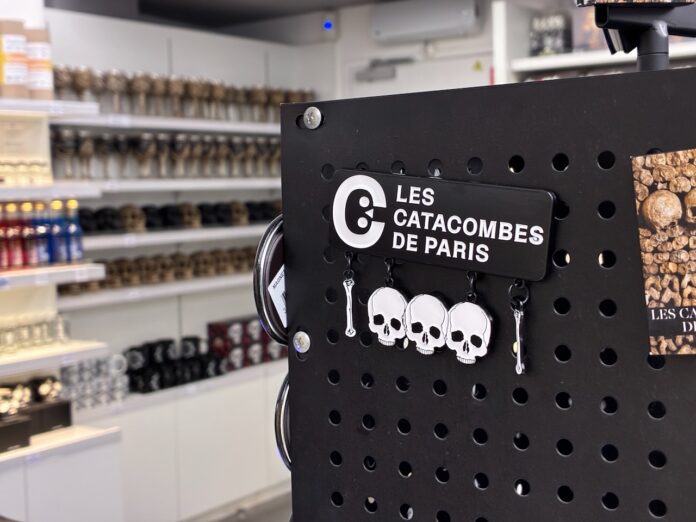
The Paris Catacombs gift shop sits at 21 bis Avenue René-Coty, and it’s the only way out. After visitors complete their underground tour, they emerge directly into this retail space. No bypass option, no alternative exit. It’s the ultimate captive audience scenario, but what makes this shop worth studying isn’t the guaranteed foot traffic—it’s what they do with it.

Understanding the Attraction

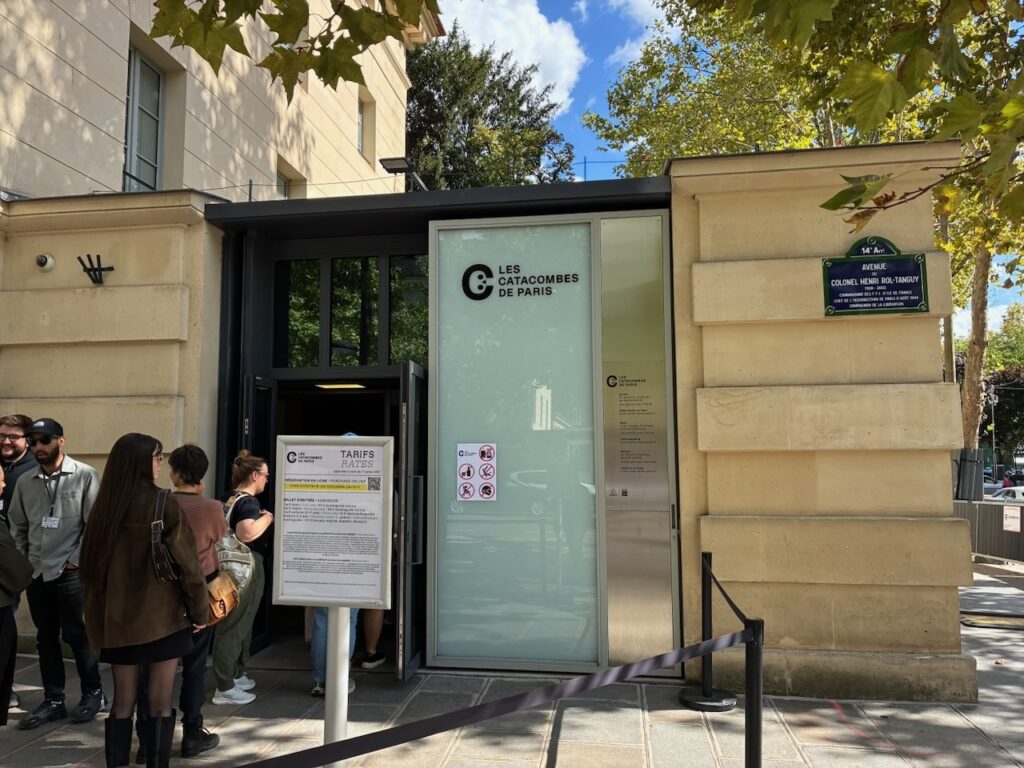
Paris Catacombs (Image: Dustin Fuhs)

Twenty meters below Paris streets, the Catacombs contain the arranged bones of more than six million Parisians. What started in the late 1700s as a solution to overflowing cemeteries became one of the city’s most unique cultural attractions. The underground ossuary spans 1.5 kilometers of former quarry tunnels, where bones were carefully arranged into walls and decorative patterns that visitors walk past during their tour.

The experience itself is deliberately constrained and atmospheric. Only 200 visitors are allowed underground at once, creating natural scarcity that drives demand. The journey requires descending 131 steps into darkness, navigating narrow corridors at 14°C with high humidity, and climbing 112 steps back to street level. The famous entrance inscription warns visitors: “Arrête! C’est ici l’empire de la mort” (Stop! This is the empire of death).

With over 500,000 annual visitors, the Catacombs ranks among Paris’s most popular attractions despite—or perhaps because of—its macabre subject matter. It’s not the Eiffel Tower or the Louvre in terms of visitor numbers or cultural prestige, but it occupies a unique position in Paris tourism: the attraction that offers something genuinely different from the city’s classical beauty and artistic masterpieces.

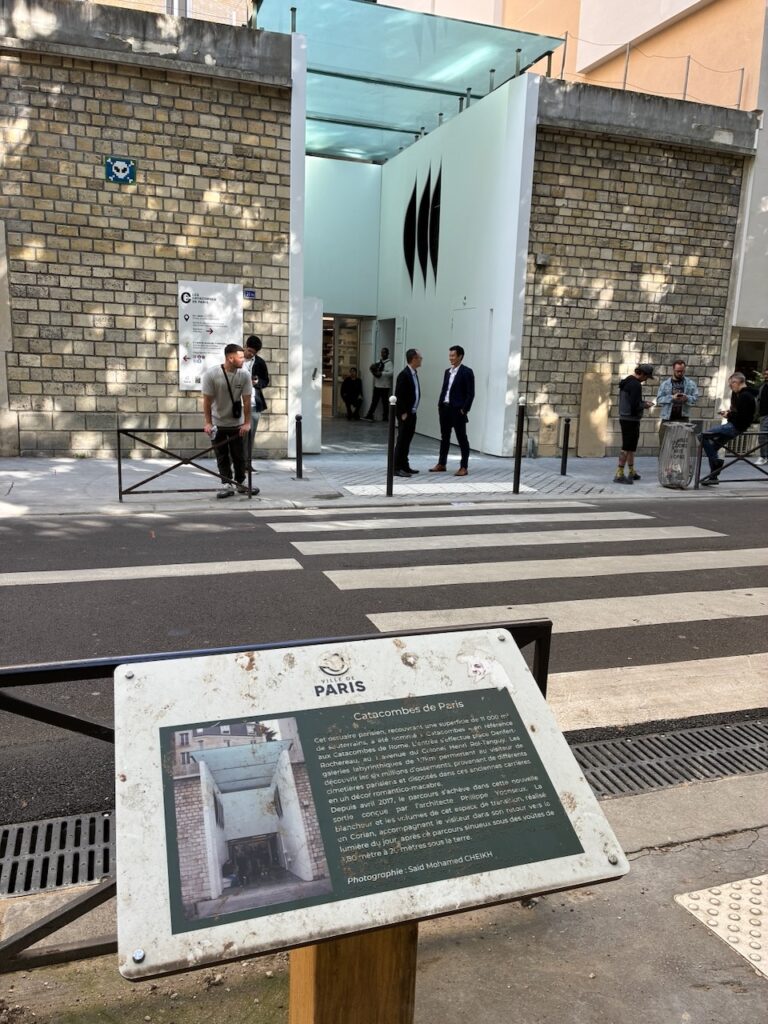
Paris Catacombs (Image: Dustin Fuhs)

Professional Retail Management Makes the Difference

Shop Paris Catacombs (Image: Dustin Fuhs)

The shop is managed by Arteum, founded in 2008 by Lorraine Dauchez, which now operates nearly 30 retail locations across France’s most prestigious cultural institutions. Their Paris portfolio includes the Eiffel Tower, Palais Garnier, Musée des Arts Décoratifs, and Musée du quai Branly-Jacques Chirac.

This scale matters. When Arteum tests merchandising strategies at the Eiffel Tower, successful tactics adapt to the Catacombs. Their in-house Design Studio creates nearly 1,000 custom products annually, giving them manufacturing relationships and design capabilities most museums lack. They understand staff training specifically for cultural retail, inventory management across Paris’s extreme seasonal tourism fluctuations, and how to design spaces that feel appropriate to heritage settings while driving commercial performance.

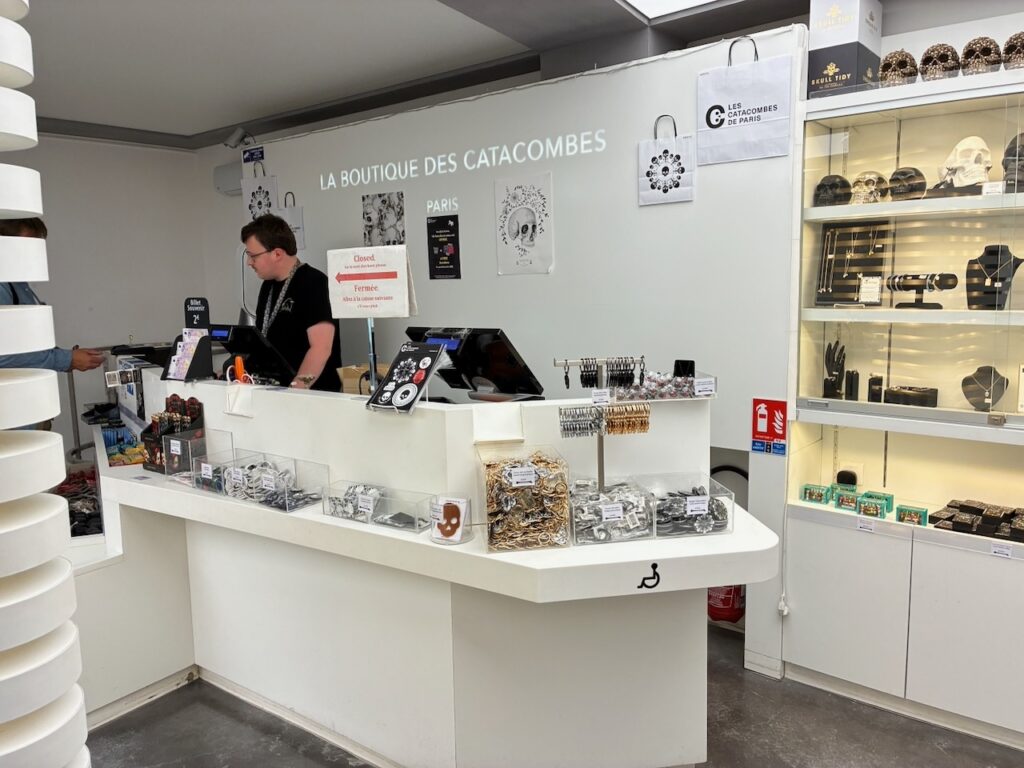
The difference shows immediately. The space is bright, well-organized, and purposefully designed. Products are displayed with clear sightlines. Price points are visible. The layout guides traffic flow without feeling manipulative.

Competing with Paris Icons Through Smart Pricing

Shop Paris Catacombs (Image: Dustin Fuhs)

Here’s where the Catacombs demonstrates sophisticated understanding of tourist wallet dynamics. When visitors plan Paris trips, they budget heavily for the big-ticket destinations—Eiffel Tower, Louvre, Versailles. By the time they reach the Catacombs, they’ve already committed significant spending to those marquee attractions.

The shop’s product strategy acknowledges this reality by positioning itself as the affordable souvenir destination that doesn’t compete on prestige but on accessibility and uniqueness. The merchandise breaks into three strategic price tiers:

Entry-Level Impulse Items (€3-8): Skull candies, bone-shaped erasers, skeleton pencils, small stationery. These are pocket-money purchases that feel inconsequential after spending €35 on Louvre admission or €150 on an Eiffel Tower dinner. They’re priced low enough that visitors buy multiples—one for themselves, several for friends.

Mid-Range Memorabilia (€10-25): Skull candles, bone-shaped kitchen tools, skeleton jewelry, branded apparel. This tier represents the sweet spot—distinctive enough to feel special, affordable enough to justify impulse purchasing. A €15 skull candle from the Catacombs competes favorably against a €40 Eiffel Tower snow globe.

Premium Educational Items (€25-50+): Specialized books on ossuary architecture, French burial history, underground Paris exploration. These appeal to serious enthusiasts who want depth, but they’re still priced below what visitors typically spend at museum bookstores like the Louvre or Musée d’Orsay.

This pricing architecture captures tourist spending that wouldn’t otherwise happen. Visitors who’ve already dropped €100+ on Louvre merchandise or €200 on Eiffel Tower experiences still have €20-30 in their “souvenir budget” for smaller attractions. The Catacombs positions itself perfectly in that remaining wallet space.

The competitive genius: By keeping prices accessible, the shop ensures visitors leave with tangible proof of their experience without feeling gouged. A skull-shaped spatula at €12 becomes a conversation piece that generates word-of-mouth marketing. It’s affordable enough that visitors actually use it rather than storing it in a drawer, which means ongoing brand exposure in their daily lives.

More importantly, it democratizes the souvenir experience. Not every Paris visitor can afford €80 Eiffel Tower champagne or €150 Louvre art prints, but most can manage a €15 Catacombs candle. This accessibility strategy builds brand affinity across broader demographics than prestige-priced competitors can reach.

The Arteum Portfolio Advantage

KIOSQUE TOUR EIFFEL (Image: Dustin Fuhs)

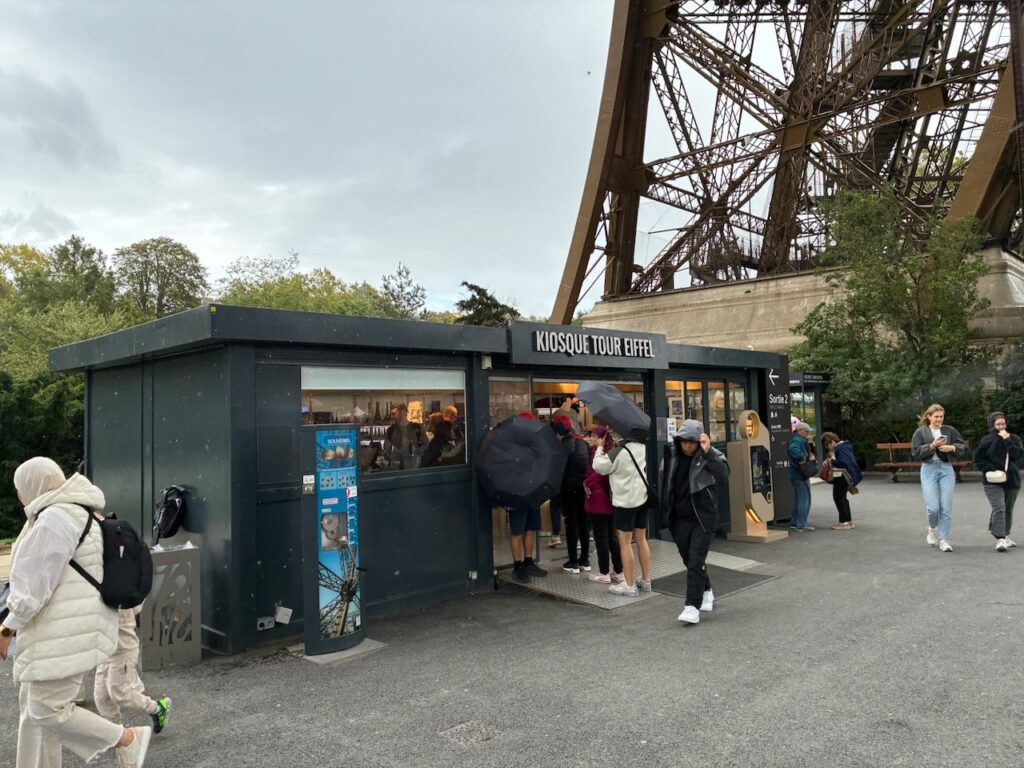
Since Arteum also manages shops at the Eiffel Tower, Louvre-adjacent institutions, and other major Paris attractions, they have unique insight into tourist spending patterns across the city. They know what visitors already bought at those locations and can strategically position Catacombs merchandise to fill gaps rather than duplicate.

If someone spent €45 on an Eiffel Tower model, they’re unlikely to buy another large decorative item. But they might grab a €12 skull candle because it’s different, affordable, and fits in their remaining luggage space. Arteum’s cross-portfolio knowledge lets them optimize for the tourist journey across multiple destinations rather than treating each shop as an isolated transaction.

This intelligence also informs inventory decisions. They know seasonal patterns—which months bring budget-conscious student travelers versus high-spending international tourists. They adjust product mix and pricing emphasis accordingly, ensuring the shop captures available spending regardless of visitor demographics.

Design That Leverages Psychology

Shop Paris Catacombs (Image: Dustin Fuhs)

The space is deliberately bright and warm—the opposite of the underground environment. After an hour in dark, narrow corridors, visitors enter an open, well-lit retail area that feels like sanctuary. This contrast isn’t accidental. It’s environmental psychology applied to retail design.

The shop uses the bone motif in its fixtures and displays, maintaining thematic consistency without feeling morbid. Shelving units, signage, and spatial elements echo the skeletal aesthetic in subtle ways. It’s branded without being heavy-handed.

Natural light comes from the exit area, making the space feel connected to the outside world. Temperature control keeps it comfortable year-round. The flooring transitions from the building’s historic elements to clean, modern retail surfaces. Everything about the design says “you’re back in the world of commerce, and it’s okay to shop.”

Smart Operational Choices

Shop Paris Catacombs (Image: Dustin Fuhs)

The shop works around several constraints that actually strengthen its effectiveness:

Bag restrictions: Visitors underground can only carry bags smaller than 40×30 cm, and there’s no coat check. The shop responds with merchandise that’s portable and lightweight. No large art prints or bulky souvenirs—everything is sized for easy carrying.

Facility placement: Restrooms are located in the exit area near the shop. This creates natural dwell time. Visitors aren’t rushing through to leave; they’re spending minutes in the space, which increases the likelihood of purchase.

No storage infrastructure: The absence of coat rooms or package holding means visitors make immediate purchase decisions. There’s no “I’ll come back for it later” option, which eliminates a common conversion killer in retail.

Single exit flow: The one-way design means staff can predict traffic patterns and position themselves accordingly. They know exactly where visitors will enter the retail space and where they’ll bottleneck.

These operational realities could be problems, but the shop treats them as design parameters instead.

The Digital Extension

Shop Paris Catacombs (Image: Dustin Fuhs)

The shop runs an online store that captures several key segments:

Post-visit purchasing: People who visited and later decide they want something. Heritage retail often involves delayed gratification—visitors process the experience, talk about it, then realize what they wish they’d bought.

International access: Global audiences who can’t visit Paris but are fascinated by the Catacombs. Online sales democratize access to exclusive merchandise.

Bulk educational orders: Schools and universities buying materials for classroom use. Teachers appreciate death-themed educational content because it engages students effectively.

The online presence recognizes that not all purchase intent happens during the visit. Some visitors need time to decide, and smart retailers capture that delayed demand.

What Makes a Great Gift Shop: The Immersive Lab Framework

The Catacombs demonstrates four principles that separate exceptional heritage retail from mediocre operations:

Destination-First Merchandising

Great gift shops put the destination at the center of every product decision. The Catacombs doesn’t sell generic Paris souvenirs—no Eiffel Tower keychains, no Arc de Triomphe magnets. Every item connects specifically to the underground ossuary experience. Skull-shaped candles, bone-patterned kitchen tools, death-themed stationery—these products only make sense in this context.

This destination-first approach creates authenticity that visitors recognize immediately. When someone buys a skull spatula from the Catacombs, they’re purchasing proof of a specific experience that can’t be replicated at the Louvre or Versailles. The merchandise becomes an extension of the visit rather than a transaction that could happen anywhere.

Strategic Pricing That Encourages Multiple Purchases

The best gift shops understand that accessible pricing drives both purchase frequency and institutional support. When items are priced at €3-15, visitors buy multiples—one for themselves, several for friends, extras for coworkers. This multiplier effect generates more total revenue than selling single high-priced items to fewer customers.

Affordable pricing positions gift shop purchases as supporting the institution rather than being gouged by it. Visitors feel good about spending €30 across six items because each purchase feels reasonable and intentional. That positive association strengthens their relationship with the destination and increases likelihood of recommendations to others.

Product Variety Beyond Tired Heritage Retail Clichés

Walk into most museum shops and you’ll find the same tired rotation: books, pins, bookmarks, postcards, magnets. The Catacombs breaks this pattern by treating merchandise as creative expression rather than obligation.

Skull-shaped kitchen utensils aren’t traditional museum fare, but they work because they’re unexpected, functional, and conversation-starting. Death-themed candy occupies retail space normally reserved for educational materials. Skeleton jewelry appeals to fashion-conscious visitors who want wearable art rather than pins that sit in drawers.

This variety signals that the shop understands contemporary consumer behavior. People don’t want pins and bookmarks—they want items they’ll actually use that happen to remind them of meaningful experiences. By expanding beyond heritage retail conventions, the Catacombs captures spending that traditional merchandising strategies miss entirely.

Shop Paris Catacombs (Image: Dustin Fuhs)

Strategic Brand Collaborations

The Catacombs’ exclusive Cluedo (Clue) edition demonstrates sophisticated brand partnership strategy. Arteum’s Design Studio created a custom version of the classic mystery game set in the Catacombs during Francis I’s 1814 visit. The game features historically accurate characters like the Prefect of the Seine and Anne Flandrin the smuggler, with game locations matching actual Catacombs chambers.

This collaboration achieves multiple objectives:

Elevates perceived value: A branded Cluedo game commands higher prices and attention than generic board games.

Extends age appeal: Families with children find relevant merchandise beyond adult-focused books and jewelry.

Creates collection potential: Board game enthusiasts seek location-specific editions, generating niche collector demand.

Demonstrates creative merchandising: The partnership signals innovation rather than reliance on basic souvenir categories.

Smart gift shops identify brand partners whose products naturally align with their destination’s theme. The Catacombs could partner with a candle maker but chose a mystery game company—a decision that acknowledges the attraction’s inherent puzzle-solving and discovery narrative. That thematic consistency creates merchandise that feels authentic rather than forced.

These brand collaborations work best when they’re exclusive. A Catacombs-edition Cluedo can’t be purchased at regular retail stores, which reinforces the “only available here” urgency that drives heritage retail conversion. The exclusivity justifies premium positioning while maintaining accessibility through recognizable brand trust.

Replicable Strategies for Any Attraction

Shop Paris Catacombs (Image: Dustin Fuhs)

Several tactics here translate across different venue types:

Professional management matters: Either bring in retail specialists or seriously study what professional retailers do. Product selection, display strategy, staff training—these aren’t details, they’re fundamentals.

Environmental design influences behavior: If your attraction involves intense experiences, design retail space as a counterpoint. Make it feel like relief rather than continuation.

Work with your constraints, not against them: The Catacombs can’t change its physical limitations. Instead, they’ve optimized around them. Your constraints are different, but they’re still opportunities.

Develop exclusive merchandise: Generic tourist items don’t command attention. Site-specific products that connect to your unique experience drive purchase intent and justify positioning.

Think about purchase timing: Post-experience retail serves different psychological needs than pre-experience or mid-experience shopping. Match your merchandising strategy to when visitors are actually browsing.

Price for accessibility and volume: Lower prices encourage multiple purchases and create positive associations with your institution. Visitors who spend €30 on six items feel better than those who spend €30 on one item.

Why This Matters for Immersive Retail

Shop Paris Catacombs (Image: Dustin Fuhs)

The Catacombs shop demonstrates that retail in cultural settings requires the same sophistication as commercial retail. Professional management, strategic product decisions, psychological space design, operational excellence—these aren’t optional.

Too many attractions treat retail as “put products on shelves and see what happens.” That approach misses opportunities and fails to extend visitor relationships with the institution.

This shop works because it’s treated as integral to the overall operation rather than as an afterthought. The same attention given to the underground experience applies to the retail space. That integration creates memorable commerce instead of forgettable transactions.

For anyone operating visitor attractions, the lesson is clear: your gift shop deserves professional attention. The Catacombs proves that when you execute retail properly, it enhances the overall experience rather than cheapening it. You just have to care enough to get it right.

More from the Immersive Lab

Behind the Book: How Retail Rewired Challenges Everything We Know About Modern Retail

How a learning disability, 25 years of retail transformation, and one bus ride conversation led to the industry's most provocative challenge to "loyalty" programs and legacy thinking

Dr. Nicole Stewart on VR Psychology: How Digital Embodiment Changes Shopping Behavior

The professor who pioneered VR education shares insights on platform shifts, AI influencers, and why your virtual shopping experience might be failing

Inside the Store: Palais Garnier Boutique in Paris, France

A walkthrough of the retail operation that turned cultural preservation into competitive advantage

Inside Camp: Why Every Mall Operator Needs This Playbook

From spatial design to partnership strategies - plus alternative solutions for properties Camp won't enter

Live Concerts: The Buying Experience of a Lifetime

Discover how technology, immersive experiences, and brand collaborations are transforming the concert-going experience into unforgettable moments.

Understanding the Museum Gift Shop

The discussion delves into how museum shops create immersive experiences through thoughtful product curation, innovative merchandising, and cutting-edge technology.

A Broadway Show Merchandise Strategy

Explore the essential elements of creating a successful merchandise strategy for touring Broadway shows, from design and logistics to marketing and audience engagement.

Trend Alert: How Consumer Behaviour is Driving Immersive Retail Experiences

Discover how tech-savvy consumers are driving trends that blend cutting-edge technology, personalization, and interactive experiences.