

France’s oldest tea house invested heavily in London’s most ambitious tea retail concept: a five-story Georgian townhouse featuring the world’s longest tea wall. But 18 months after opening, the gap between stunning design and operational execution reveals why building experiential retail is easier than running it.
The Location Strategy: Why King Street Mattered
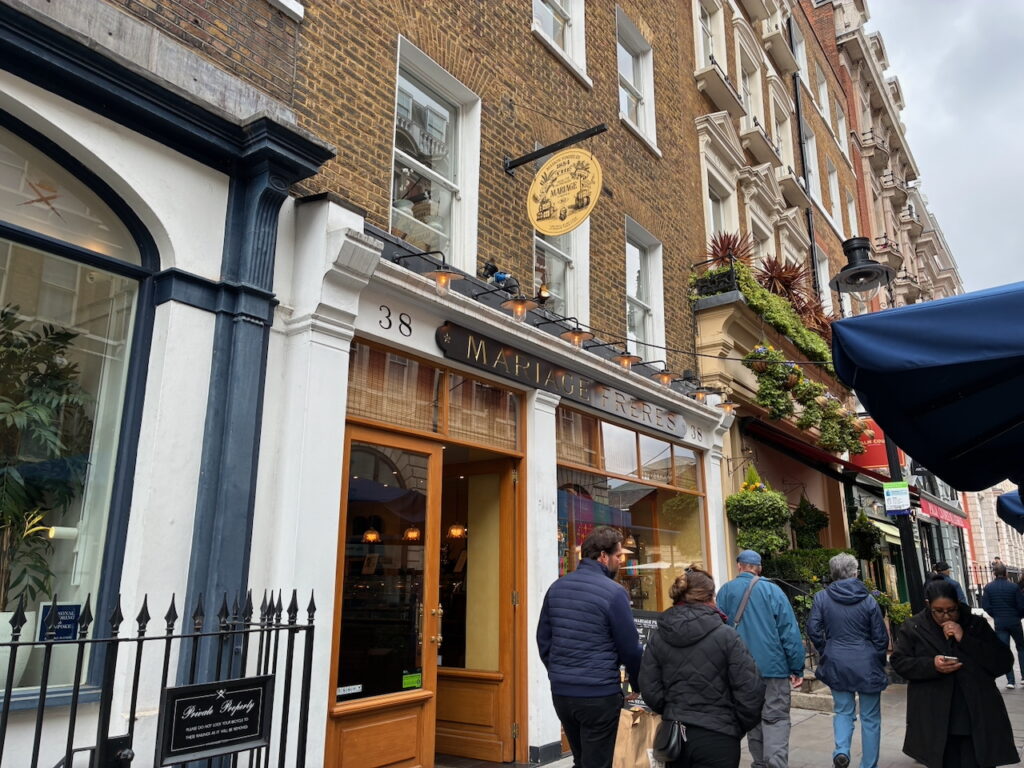
When Mariage Frères finally opened in London in early 2019 (after delays with the heritage building pushed opening from September 2018), it marked a significant expansion for France’s oldest tea house. Founded in 1854 by brothers Henri and Edouard Mariage, the company had spent over 130 years as a wholesale-only business before transforming into retail in 1983 under new leadership. By 2019, they operated over 30 locations globally but had never opened a full flagship outside of France—until King Street.
The location choice wasn’t random. Mariage Frères didn’t just choose Covent Garden—they specifically targeted King Street, one of London’s most distinctive luxury retail corridors. The pedestrianized street connects directly to the historic Piazza and Market Building while housing carefully curated neighbors: Petersham Nurseries’ sprawling lifestyle emporium, Clos Maggiore (often called London’s most romantic restaurant), and high-end fashion boutiques like Ralph Lauren and Hackett.
King Street’s pedestrianization for 20 hours daily creates a unique retail environment—high foot traffic without vehicle noise, extended dwell times, and natural congregation points. The street functions as an outdoor mall with Georgian architecture, attracting both affluent locals and international tourists seeking authentic London experiences.
After having studied several options, Mariage Frères has leased a commercial property of circa 1,000 sqm within an independent restructured building at walking distance from the Covent Garden market. The 1,000 square meter footprint across five floors represents significant investment—Georgian townhouse retail space in this corridor commands premium rents, likely £200-300 per square foot annually.
The Design Strategy: Georgian Shell, French Soul
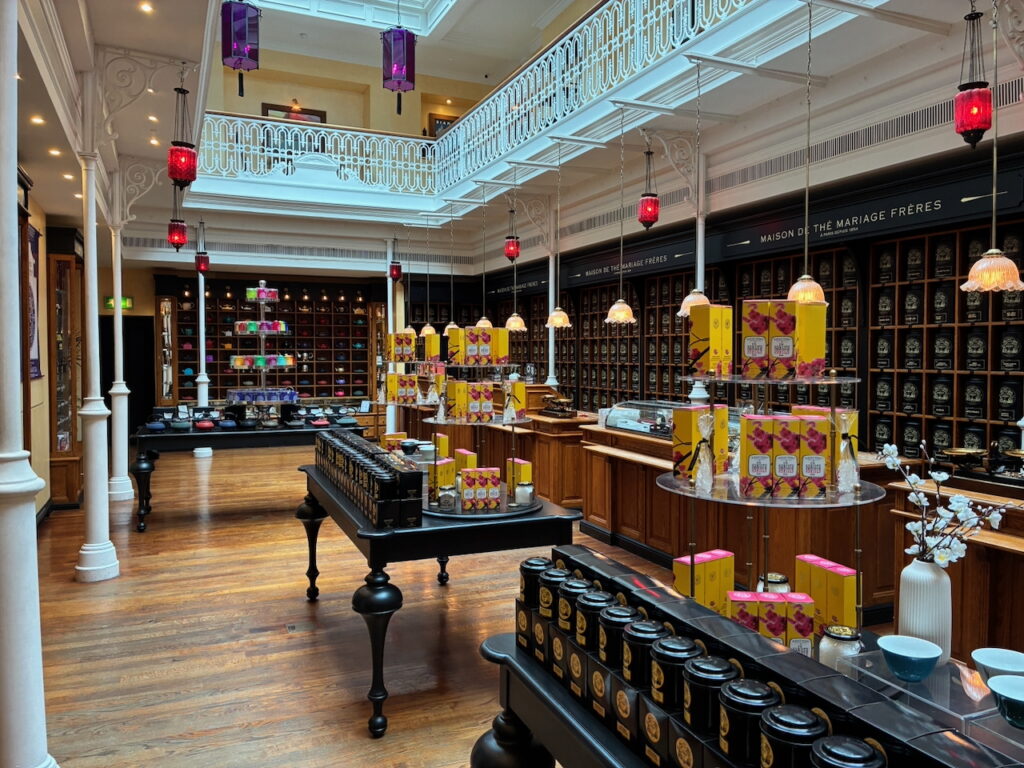
The physical transformation of 38 King Street demonstrates sophisticated spatial design thinking. The brand’s largest branch to date will be housed in a beautiful five-storey listed Georgian townhouse on Covent Garden’s King Street, requiring careful navigation of heritage building restrictions while creating modern retail theatre.
Ground Floor: The Tea Wall as Retail Architecture
The centerpiece—nearly 1,000 tea varieties in identical black canisters stretching floor-to-ceiling—transforms traditional retail display into architectural statement. The apothecary aesthetic serves multiple functions:
- Visual Impact: Creates immediate Instagram moments and word-of-mouth marketing
- Product Hero-ing: Elevates commodity tea into luxury collection worthy of museum display
- Operational Theater: Rolling ladders turn staff retrieval into performance, extending transaction time and customer engagement
- Space Efficiency: Maximizes SKU density per square foot while maintaining visual coherence
This branch looks like the other shops in France, except it has a skylight which brings sunlight into the dark wood tea counter and wall of tea containers. The skylight addition—likely added during renovation—demonstrates how they adapted the Georgian architecture to enhance the retail experience without compromising the heritage character.
First Floor: Gallery Dining Above Retail Theater
The restaurant design creates multiple distinct zones within the Georgian room structure:
The Voyage Gallery: Guests can either sit in the Voyage, a bright and airy gallery, or the White Himalaya room, surrounded by antique tea canisters. The gallery positioning allows diners to observe the retail floor below, creating entertainment value while extending dwell time and encouraging post-meal shopping.
Visual Connection: The open sightlines between floors maintain the building’s architectural integrity while creating psychological connection between retail and dining experiences. Customers can see the tea wall from dining areas, reinforcing product desirability.
Lighting Strategy: flooded with daylight from the atrium above and surrounded by an intricate listed heritage balustrade maximizes natural light penetration through the Georgian structure while preserving period details that add authenticity.
Second Floor: Museum as Cultural Authority
The second floor Museé de Thé, showcasing antiques from the tea trade. Pride of place is the personal collection of the Mariage Frères family, including oak and beech tea chests and pewter tea boxes from their years at sea. The museum serves strategic purposes beyond cultural programming:
- Legitimacy Building: Museums confer institutional authority that pure retail cannot achieve
- Customer Journey Extension: Free access encourages full building exploration
- Lead Qualification: Museum visitors demonstrate serious interest in tea culture
- Competitive Moat: Authentic historical artifacts cannot be easily replicated by competitors
The Neighborhood Effect: King Street’s Luxury Ecosystem
Mariage Frères benefits from proximity to complementary luxury experiences. King Street plays host to a variety of luxury retail brands including Ralph Lauren, Sandro and Hackett, with others such as Apple, Glossier, Chanel and Dior in the immediate vicinity. This clustering creates several advantages:
Cross-Pollination: Customers visiting nearby luxury retailers discover Mariage Frères organically Extended Shopping Sessions: Multiple high-end destinations justify longer Covent Garden visits Brand Association: Proximity to established luxury brands enhances Mariage Frères’ positioning
Award winning restaurants such as Clos Maggiore, La Goccia, Oystermen, Sushi Samba and Frenchie operate within 100 meters, creating dining density that keeps affluent customers in the immediate area throughout the day.
The Petersham Nurseries Precedent
Petersham Nurseries, a garden centre and restaurant that organically grew out of an elegant 17th-century home in Richmond, has sent out shoots further afield. A second destination has opened in a sprawling 16,000 square foot townhouse site in Covent Garden. Located at 31 King Street, Petersham Nurseries’ success likely influenced Mariage Frères’ location choice.
Petersham demonstrates how lifestyle brands can successfully occupy large Georgian townhouse spaces in Covent Garden by integrating retail, dining, and cultural programming. Their model—premium pricing justified by unique experience and beautiful space design—provided proof of concept for Mariage Frères’ approach.

The Operational Reality: When Design Meets Daily Operations
The Ladder System: Instagram vs. Efficiency
The rolling ladder system creates inherent operational tension. While visually striking and Instagram-perfect, staff climbing to retrieve products takes 2-3 times longer than traditional retail transactions. During peak hours, this creates bottlenecks that impact customer experience and staff efficiency.
The system works beautifully for photography and browsing but struggles during busy periods when multiple customers want different teas simultaneously. This represents the core challenge of experiential retail—features that enhance experience can complicate operations.
Staff Training Requirements
Operating the tea wall requires deep product knowledge across 1,000+ varieties. Staff must understand flavor profiles, brewing techniques, and food pairings while managing the physical demands of ladder climbing and maintaining theatrical presentation. This creates higher training costs and longer onboarding periods than typical retail.
The multi-business model—retail, restaurant, museum, events—requires different skill sets and management approaches within the same space. Few retail managers have experience coordinating museum curation, fine dining service, and specialty retail simultaneously.

Revenue Model: Multi-Stream Monetization
The five-floor format creates multiple revenue opportunities from expensive real estate:
Ground Floor Retail: Tea sales, accessories, gift sets, takeaway beverages First Floor Restaurant: All-day dining, afternoon tea services, private dining Museum Level: Free but drives retail conversion and extends visit duration
Upper Floors: Private event spaces for corporate functions and special occasions Ancillary: Tea cocktails, branded merchandise, seasonal programming
This diversification maximizes revenue per square foot but requires operational excellence across multiple business types simultaneously.
The French Positioning Strategy
Rather than compete directly with British tea institutions like Fortnum & Mason or Twinings, Mariage Frères positioned themselves as distinctly French luxury. This creates differentiation while requiring customer education about French tea culture and preparation methods.
Bringing tea savoir-faire to the capital—the French approach emphasizes technique, ceremony, and sophistication over British tradition and comfort. This positioning works for customers seeking alternatives to familiar tea experiences but may limit appeal among traditionalists.
The Investment Thesis: Experience as Competitive Moat
The Georgian townhouse conversion represents significant capital investment—likely £2-3M including property, renovation, inventory, and setup costs. This creates high barriers to entry but also requires substantial revenue to justify the investment.
The experience-first approach aims to create competitive advantages that pure product retailers cannot easily replicate:
- Authentic historical setting and artifacts
- Theatrical retail presentation
- Multi-sensory engagement (visual, olfactory, tactile)
- Cultural programming and education
- Instagram-worthy moments throughout the space

Lessons for Experiential Retail
Mariage Frères demonstrates both the potential and pitfalls of ambitious experiential retail:
What Works:
- Dramatic visual design creates immediate impact and organic marketing
- Multi-business integration maximizes revenue from expensive real estate
- Cultural programming builds brand authority beyond pure commerce
- Location clustering with complementary luxury brands enhances positioning
What’s Challenging:
- Operational complexity increases with experience ambition
- Staff training requirements multiply with product depth and service expectations
- Beautiful design doesn’t substitute for service execution
- High fixed costs require consistent performance across all revenue streams

The Verdict: Vision Meets Reality
Mariage Frères created London’s most visually striking tea retail experience. The Georgian townhouse setting, dramatic tea wall, and integrated restaurant/museum concept demonstrate how traditional retail can evolve into lifestyle destination.
But experiential retail success depends on operational execution matching design ambition. Beautiful spaces require beautiful service to justify premium pricing and create repeat customers.
The concept proves that ambitious retail experiences can work in competitive London markets when properly funded and designed. The challenge lies in delivering that experience consistently while managing the operational complexity required to make it profitable.
Whether Mariage Frères perfects the execution will determine if this becomes a format others should study or an expensive lesson in retail theater.
