

You finish the self-guided tour of Palais Garnier and follow the flow toward the exit. But instead of being dumped onto a busy Paris street, you’re directed into what might be the smartest cultural retail operation in the world. The transition is seamless – you never leave the experience bubble.
The first thing that hits you: this isn’t a gift shop that happens to be in an opera house. It’s an opera house that happens to include commerce. The vaulted stone ceilings ARE the store design. No dropped acoustical tiles, no harsh fluorescent lighting fighting against 150-year-old architecture. They let Garnier’s bones do the work.
Right up front, you see “Phantom of the Opera” merchandise that doesn’t make you cringe. The secret? This building inspired the story. So instead of feeling like tourist trap kitsch, it feels authentic. Smart typography, quality materials, reasonable pricing that doesn’t insult your intelligence. When you see a t-shirt for €25 instead of €45, you’re already more inclined to buy.
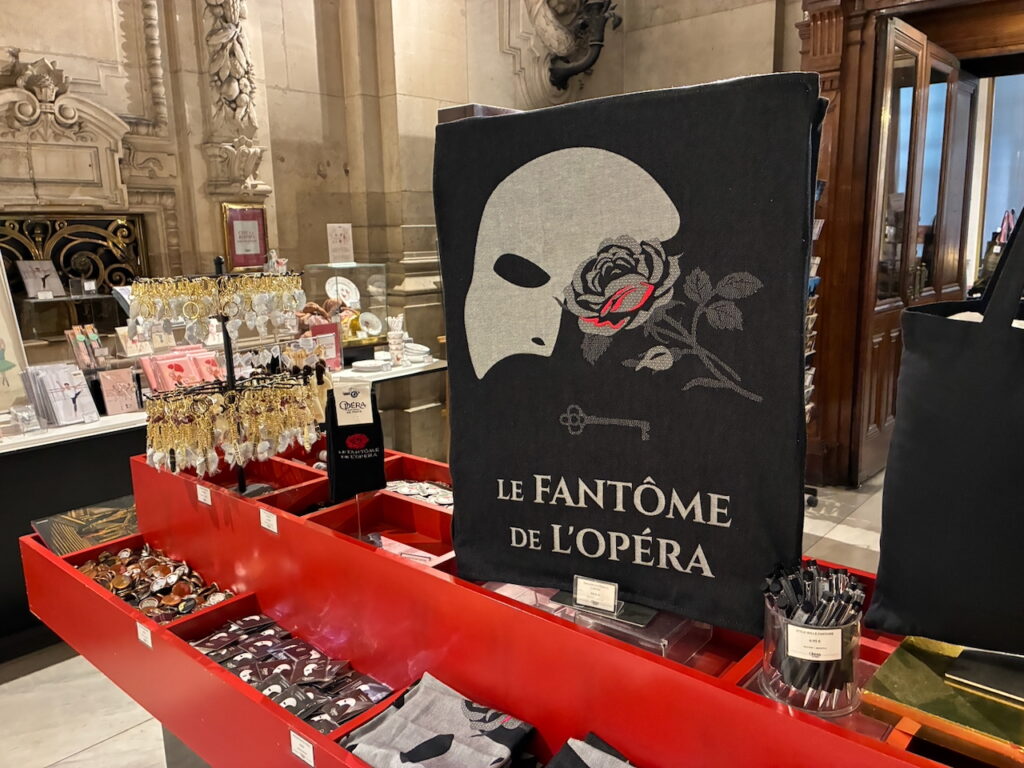
The staff working this section clearly know their stuff. Ask about sizing and you get practical answers. Ask about the building’s connection to the Phantom story and you get actual history. These aren’t seasonal retail workers – they understand both the merchandise and the cultural context they’re selling within.
Moving deeper, the space opens into something that feels more like a museum gallery than a shop. Large photographs of the opera house displayed on easels create natural browsing areas. The lighting fixtures hanging overhead could be original to the building – everything feels intentionally curated rather than hastily assembled.

This is where you start seeing the price range expand strategically. Coffee table books about opera production, architectural guides, specialty items that appeal to serious culture enthusiasts alongside the tourist basics. But nothing feels randomly thrown together. Every product connects to either the building, the art form, or current productions.
The partnership strategy becomes obvious as you move through different sections. Premium lighting fixtures, home goods with serious design credentials, items that cost real money but justify it through quality and cultural association. This isn’t typical museum shop markup – these are legitimate luxury goods that happen to be sold in a cultural setting.
What’s clever is how they position it. These aren’t souvenirs anymore – they’re cultural artifacts. Design objects that carry the weight of this institution’s reputation. The pricing reflects that positioning, and somehow it works because the setting supports the premium narrative.

The vintage radio display stopped me cold. Here’s educational merchandising done right – classical music collections organized around a piece of technology that tells its own story. Kids can understand the connection between old and new, adults appreciate the nostalgic reference, and the music selection guides people toward specific purchases.
Books anchor everything. Multiple languages, different age groups, from picture books for children to serious architectural references for professionals. The selection signals that this institution takes education seriously – retail becomes an extension of their cultural mission rather than exploitation of it.
You can see the “Made in France” positioning throughout – partnerships with local artisans that support the broader French luxury ecosystem while creating products that exist only through this cultural collaboration. It’s cultural authenticity that happens to generate revenue, not revenue generation disguised as culture.


The checkout experience reveals their operational sophistication. Modern payment systems that don’t disrupt the aesthetic, commemorative medallions at accessible price points for impulse purchases, and staff positioned to offer recommendations without being pushy.
Premium collectibles occupy prime real estate for visitors who’ve become fully invested in the cultural experience. Ballet figurines priced for serious collectors, displayed like museum pieces in proper cases. This is merchandise for people who don’t just visit the opera – they live it.

The display quality justifies the pricing. These aren’t impulse purchases; they’re considered acquisitions for people who want objects that match the institutional prestige they’ve just experienced.
The children’s section reveals long-term thinking that extends beyond transaction optimization. Educational materials that introduce kids to opera and ballet, activity books that make cultural traditions accessible, products that build future audiences while serving immediate family needs. Parents buying these items aren’t just purchasing entertainment – they’re investing in cultural education.

Functional merchandise gets the same thoughtful treatment. Tote bags featuring architectural facade details transform practical purchases into cultural ambassadorship. You’ll actually use these bags, and every time you do, you’re carrying a piece of this institution into your daily life. The design sophistication elevates utilitarian items into meaningful objects. This bag doesn’t scream “tourist souvenir” – it suggests cultural sophistication and personal taste.
Standing in the final section, you can see the complete integration. Contemporary retail fixtures serve operational needs without fighting the historic architecture. The stone walls and vaulted ceilings provide atmosphere that no conventional store could replicate.

This is what happens when cultural institutions treat retail as storytelling instead of afterthought. Every decision – from product selection to staff training to spatial layout – reinforces the cultural narrative rather than undermining it.
You leave with purchases that feel meaningful rather than obligatory. The pricing felt fair, the staff were knowledgeable, the products connected to your experience, and the setting never broke the cultural spell. It’s retail that enhances the cultural experience rather than exploiting it.
Most importantly, you’d come back. Not just for performances, but specifically to shop. Because they’ve created something that doesn’t exist anywhere else – a retail environment that’s as culturally significant as the institution it serves.
That’s the real achievement here. They didn’t just solve the “gift shop problem” that plagues cultural institutions. They turned retail into another reason to visit, another way to connect with the mission, another revenue stream that actually strengthens rather than compromises what makes this place special.
